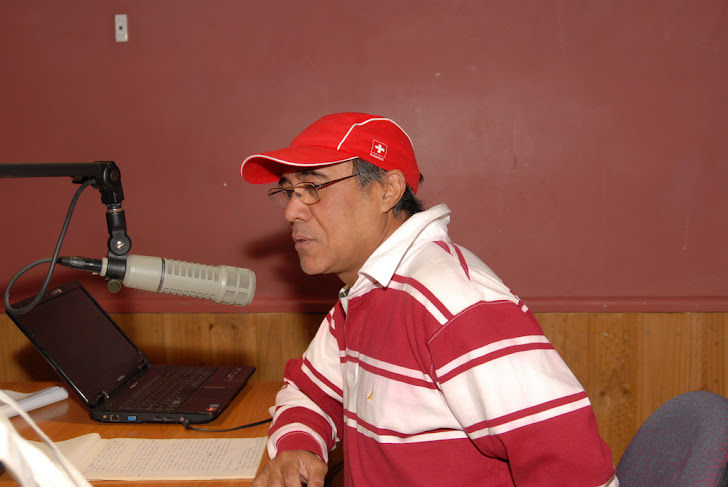
George at Studio 2GLF 89.3 fm

George at Studio 2GLF 89.3 fm
Broadcasting Emission Kontak

Monday, 25 June 2012

The boat people by GDL


The boat people: refugees, illegals or people smuggling?
By GDL

The controversy surrounding the boat people lies in the paradox that the history of migration to Australia started in 1788 with the boat people coming from England They were both convicts and free people. Some even came for religious freedom. The irony at the time was, they did not have a visa and came as invaders of the land habited by the aborigines. Yes, invaders because it has now been proved that Australia was not a “terra nullius” as the English, at the time, wanted us to believe. They can even be called “illegals” in modern terms.
The English and Europeans and even those coming from the colonies like Mauritius at the time, did not need a visa to settle down in the land down under up and until Federation. In the 1940s many workers, particularly from Italy came to build up the infrastructures. The Italians were escaping not persecution, but recession from Europe. Many also went to the USA at the time.
Japanese after the wars were granted permission to stay in Australia for having fought against Japan invasion. Were they the first refugees?
Many Germans and Jews came to Australia during and after the world wars to escape persecutions. They can also be called refugees.
Then came the official mass refugees from Lebanon, Vietnam, and more recently from Sudan. There are also those pacific islanders who come by the New Zealand's backdoor, are they also illegals?
In the 60s and 70s many more came by boat from everywhere but this time with a visa. Those from Latin America were definitely escaping dictatorial regimes prevailing at the time in a turmoil South America, with dictators like Pinochet, Somoza, Castro, Perone and others…
The great exodus of the 60s and early 70s to Australia happened for obvious reasons; the migrants were fleeing from political unrest. Can they also be qualified as “refugees”? The creoles of Mauritius were selling everything to embark on the boats to escape the Creole bashing by the newly Hindu establishment in Mauritius. They can also be called “refugees” of modern time.
Anyone who say or can prove that he or she is ‘persecuted” in his/her country for religious, ethnic or political reasons can claim refugee status under the UNHCR.
It this a too simplistic definition? How can the Australian authorities contest if someone come by boat and claim refugee status? Specially when they have deliberately destroyed their papers.
Note that it is not only those few who come by boats who claim refugee status in Australia but many who come with a tourist or visitor visa. These people having paid a return ticket, having proved to the Australia High Commission that that have financial means to cover their short stay in Australia, but as soon as they land in Australia do not want to go back.
According to the Department of Immigration, 80 % of the over-stayers have applied for a refugee visa and the rest 20 % have no intention to surrender to the authorities.They are harboured by relatives and claim refugee status. Is this fair and correct? Mind you that if some fail to prove that their lives are in danger if they go back, many others finally obtain permanent residency.
Where does that leave us concerning the boat people who are becoming the political football of Labor, Liberal and Greens ? No one seems to have a solution to the problem. Onshore or offshore processing, TPV or PPV or turning back the boats will not solve the problem as long as there is a market for people smugglers.
The boat people are definitely queue jumpers who think they have no chance going by the door because of the long processing queues at the UNHCR offices. Are they to be blamed when they learned that most of the boat people have finally obtained permanent residency in Australia?  For them it is worth paying people smugglers and the corrupt Indonesia police, get on a boat and make way to Australia. The people smugglers are very smart, they follow closely the political debate in Australia and know exactly how and when to sell their product. Their rate of success, be it under Liberals and more so under labour government, is high. So why should they stop as long as there is a market and a good product to sell to the “refugees’? 
Australian taxpayers are surely disgusted with the continuous saga of boat people. While the labor government is bleeding over the controversy, the Liberals are making a mockery of the situation and drawing political capital out of it, as every new boat that arrives is a nail in the coffin of Julia Gillard and the Labor government.
So why should the Libs collaborate with the failed policy of government to save them?  This is where Julia becomes ridiculous in trying to get the collaboration of the Libs for the Malaysian solution. The Libs have enough grounds not to collaborate. They want the government to implement the Howard policy which “worked” to score more political points.  
The core of the problem is that endemic corruption in Indonesia is favoring people smuggling.  It has to be stopped. The boats have to be stopped from Indonesia. But can one stop corruption in Indonesia ?? You must be joking!!!
Even if it seems that the Government is giving grounds, as far a reintroducing TPV and considering Nauru, they will surely not adopt the only policy advocated by the Libs. It would be ‘loosing face” towards the public. But what has labor got to loose when they seem to have already lost everything?
Someone who is drowning does not choose which hand to catch be it a friend or a foe. In these circumstances it is better to try something rather than continue to bang heads against the wall.
Julia and the Labor government has nothing to loose by embracing the Libs policy of
TPV and turning back the boats. Unless they do not care about the millions of our dollars being spent on Christmas Island and with the new refugee centres.

But taxpayers that we are  do.!


Saturday, 16 June 2012

Jakarta, where postmodernism and Muslim intersect

By GDL

With a population of more than 230 million where around 85 percent are Muslims, Indonesia is said to be the biggest Muslim country. While this statement could be correct, to say that it is a conservative society is probably incorrect. Being a Muslim country does not necessarily mean a conservative society as far as Jakarta in particular, and Indonesia in general, are concerned.

While there  is a very small minority, if not a pocket of Muslim fundamentalists, (as it is probably the case in many western countries), they tend to be more vocal and visible, going to the extent of using unconventional methods to make themselves heard. These fundamentalists are only trying to destabilise the country as they have no plan for the future. Their only aim is to make Indonesia an Islamic Republic, and would not care less for the betterment of the millions. The Bali bombing following September 11, was a very bad publicity for the country, mainly from western countries like Australia. Indonesia, however, seems to have recovered from that ugly and sad event.Since the attempted murder on the President Susilo Bambang Yudihoyono, following his overwhelming second time election, the terrorists are closely watched and the Jamiah Islamya has meanwhile, been dismantled.

Save for these fundamentalists, the “Muslims” of Indonesia are very open and progressive. They do not follow strict Muslim or Sharia laws. The Muslim religion was introduced well after the Hindu and Buddhist religions in the archipelago, by Arab merchants in the 16th and 17th Centuries. In fact the songs and dance are still closer to the Indian ones. The danduk is more of the Bollywood style.

Mr Jacques Santoo, a French businessman who is married to a Muslim Indonesian and has lived in Indonesia for more than 20 years, explained, “Among most Indonesians, Islam is only an element in a syncretic belief system that also includes Animist and Hindu-Buddhist concepts. Javanese culture for example, has its own authenticity, specificity, customs, traditions, family rules and social structure which are not disturbed by the Islam religion. Javanese (and Sundanese) are noticeably more open to western culture in their consumption patterns and lifestyle. Some of the shopping centres are very modern and are always full and overcrowded on Sundays.”

For the Javanese, as well as for the other ethnic groups like the Sundanese, Mandurese and Coastal Malays and Balinese, there is a noticeable demarcation between culture and religion. All while being Muslim, the religious belief does not impinge or influence the Javanese culture. This is very obvious and conspicuous when visiting Jakarta and mixing with the people.
Never will anyone be greeted by “Salam malaikum” but rather by “Salamat pagi or Salamat tidur ” meaning Good Morning, or Good Night”.
The language, Bahasa Indonesia, is the lingua franca of Indonesia. It is a symbol of unity and nationalism, adopted as the official and national language, among the 300 different languages spoken throughout Indonesia. It is a dynamic language which is contently absorbing new vocabulary including English, which is the most popular foreign language.
It is very appreciated if the visitor could speak a few words of Indonesia which will be rewarded by “Wah, saudah lancar bahasa Indonesia” (oh, you speak Indonesian!”)  which is a compliment to your fluency.

Mrs Danielle Adolphe an expat teacher, who has worked in Jakarta for many years. said, “Javanese are generally shy but very polite, agreeable and do not like arguing. Faced with an embarrassing situation they will simply smile as a way of withdrawal.”
The people Indonesia put emphasis on politeness and civilities. For example they will never accept a gift if you do not insist. The word “Tolong” (please) and “Terima kasih” (Thank you) are always present in conversation with a bow.

While from outside there is the perception that Indonesia is a conservative Muslim society, the internal reality is completely different. If some girls or women wear the Jilab it absolutely does not mean that they are conservative or submissive. These ladies are on the contrary very free and open. The Jilab (covering the head only) is very elegantly worn with T-shirt and tight jean. Two young “Muslim” girls could be seen riding their motorbikes until late at night, even in the remote country areas.

As opposed to the hypocrisy in the western world, the sex industry is a booming business and brothels are fully legalised as they form a big part of the economic activity. They provide jobs for the millions who would otherwise be unemployed and living in abject poverty. It is the case not only for the girls, but also all other associated jobs like cleaners, bar attendants, etc… There are many big and sophisticated brothels in Jakarta, where hundreds of young and beautiful girls “work” in the open. The brothels are mere big entertainment centres. These are places for locals and tourists can freely consume alcohol, socialise, listen to live music and watch a show. This industry forms a big part of the strong aggregate internal consumer demands.

With a market of more than 230 million consumers, Indonesian’s economy is very strong. If it is now ranked among the top ten economies in the world, it is poised to be the fourth behind China, USA, Europe and India by the year 2040. This vast country covers the biggest part of the intersection between the Indian Ocean and the Pacific Ocean. It is the gateway to these two oceans.
Indonesia’s economy escaped the global financial crisis because of its strong reliance on internal consumer demands and imports for only 20 percent of its GDP. The country produces it own petrol besides being rich in mineral resources like gold and iron ore. The GDP per capita is around $U4,334.
If there are ominous signs of wealth, if not opulence, in Indonesia like top class hotels and boutiques and luxurious cars, there are still many facets of a third world country. There are many old and shabby buildings and houses and millions are still living below the poverty line. However this should be taken with care as poverty is a relative concept in Indonesia, not to be interpreted and applied with the same measurement of western societies. Indonesians though “poor” are happy, always smiling and do not complain. They are very enterprising and are content with what they have.

Happiness is what you make out of it. It is something that money can’t buy specially in Indonesia.

Friday, 25 May 2012

A quelque chose malheur est bon by GDL

The "BOMB" scare which happened on MK 943 last Wednesday has been the talk of the town and non stopping. I have been flooded ever since by phone calls, sms and emails.
While it was a serous matter and no joke, never in the history of Air Mauritius has the carrier been subject to  so much publicity. One can say it was bad publicity but as marketers tend to say,  any publicity is good publicity.

Indeed I concur that it was a "good" publicity,  not only for Air Mauritius, but also for Mauritius as well. Never has Air Mauritius or the MTPA been able to reach the entire Australian market during their many many years of presence in Australia.(and around the world).

I explain: from the moment the news broke out, all the media, traditional, new and social, in Australia and around the world reported the news. A world wide audience heard the word "Mauritius." and discovered it.
In Australia alone, some 27 million now know where  Mauritius is and that there is an airline with flights Sydney, Melbourne, Perth if they want to visit the tourist paradise of the Indian Ocean.
The other good publicity was, how the crew handled the matter so professionally. At the end of the day, it was only a can of soft drinks. This reassured passengers of the safety image that Air Mauritius has always projected, " Passengers' safety come first".

"Sadly" this came at a time when Air Mauritius is pulling out of Melbourne, a city which has been loyal to the airline and filling its planes. Even in this precarious time there were 181 passengers on board MK while Air Austral for example, is flying near empty from Sydney.

I said earlier  that I received many communications  from Mauritians of Australia and overseas.
While some were very concerned, others were  trying to find out more, some were even trying to play Inspector Colombo  like:
When and where exactly was the can of soft drinks? Was it full or empty? Was the word bomb stuck to the can or was it hand written on it ? What type of pen was used ?
Someone even joked  : C'etait une bombe "alerte" !
One funny comment went " Mo crawr zot ti pe ecrir BOMBLI" and did not have time for the "LI".  A passenger might have stuck some of these badly smelt commodity in a can of soft drink. It could have been from the previous flight Mauritius- Australia. As Mauritians bring in achards in Australia, zot osi ti pe apporte Bomli.!!!

These are the more serious comments I received :
 - C'est une mise en scene.
- This cannot come from any passenger, No way!
- A scenario to portray  Australia is bad.
- Another excuse from MK to pull out of Australia.
- It is politically motivated by Port Louis to blame/penalise the Creoles of Australia.
- This exemplifies the tension that exists between the parties at MK.
- Someone somewhere want to take a revenge on Air Mauritius.

Anyway, it was a day to be remembered for Air Mauritius, a good souvenir of Australia.
But as said earlier never had Air Mauritius received so much  exposure.

GDL.


Tuesday, 22 May 2012

Le changement il est deja la

By GDL.

During the Presidential campaign, the Socialist candidate Francois Hollande slogan was
" Le changement c'est maintenant".
Actually it did not take long for the French people to see " le changement" as soon as Mr Francois Hollande was officially intronised as President of France.
His first visit to Germany to discuss European matters or " La crise Euro" was a victory for Francois Holland as his " croissance" (growth) was "considered" by the Chancellor Angla Merkel, who said initially, she was opposed to " la croissance" and preferred " l'austerite" ( austerity measures).

Francois Hollande took his concept of "la croissance"  to the G8 meeting and succeded in convincing President Obama and the rest of the G8, that growth was the way forward. There was even an editorial saying how Angela Merkel was " isolated" on her concept of austerity.

The second great " changement" which the French people and the world was quick to notice, was the composition new French Government. It was a marked contrast with the Sarkosy and Fillon style. For the first time France has a government with 17 female ministers and so many young talents.

The third change was Francois Holland's victory in maintaining that the French military troups will be back to France by the end of this year. Barak Obama. apparently tried to convince Francois Hollande to change his mind but he resisted. That's what we call "n'avoir pas froid aux yeux" even while having an eye to eye contact with the most powerful person in earth.

Ah, j'allais oublier cette reduction de salaires des Ministres de 30%. Quel exemple pour les politiciens de Maurice et de L'Australie !! Je dirai plutot une claque a l'UMP.
Le changement en France est non seulement "maintenant", mais il est deja la.

GDL.

Wednesday, 16 May 2012

Divorce in decline in Australia

Divorce in Decline in Australia, by GDL

Strangely as it may sound divorce is in decline in Australia. The number of divorces granted in Australia has been decreasing each year since reaching a peak in 2001. A recent report from the Australian Bureau of Statistics, shows that divorce is in decline and marriage is on the rise. In 2009 there were 118,756 marriages registered and 121,176 in 2010. This represents an increase of 0.9 per cent or 1,058 more marriages. It is the highest number in any one single year. In contrast, there were only 47,209 cases of divorce in 2009 as compared to 52,700 on 2004. Why this turnaround when one decade ago, one out of 3 marriages ended in divorce?

Studies carried out on a marriage breakdown found many reasons e.g. marrying too early, poor communication, basic unhappiness, loss of love, incompatibility, infidelity, mental illness, emotional problems, deception over expectations of roles, low education, low income, parental divorce, early pregnancy, interpersonal conflict, just to name a few. It is also found that very often divorce is very much associated with economic circumstances and if the couple’s financial situation is stable, the couple has one thing less to argue about.
On the other hand, the Institute has identified the following attributes of healthy couples are: a sense of respect and feeling appreciated, trust and fidelity, good sexual relations, good communication, shared values, cooperation and mutual support, enjoyment of shared time, a sense of spirituality and the ability to be flexible when confronted with frustrations and changes, appreciation for each other.
Commenting on the decline in divorce, Peter Macdonald, Head of Demographics at the Australia National University, found that one reason for the divorce in decline, could be the trend of living together before marriage. He said that in 2008, seventy-eight percent of marriages were preceded by a couple cohabiting.
The economic argument also looks valid towards the longer duration of some marriages. The Australian economy has been strong for the past decade, and there has been a low rate of unemployment. The economy of Australia was not so much affected during the Global Financial Crisis in 2008 and we did not face any recession as opposed toUSAand other European countries. As the economy continues to grow with the unprecedented mining boom, and record exports to China, and the other Asian Countries, this seems to have positive impact both on the economy as well as on social life. It coincides with the fact that families seem to be sticking tougher more.
Another factor contributing to the decline of divorce is the new composition of Australian population i.e. the increasinglyAustraliamulticulturalism. According to the population census conducted last year, 27 percent of Australian residents were born overseas and increasingly, coming from South East Asia.
According to the Australian Bureau of Statistics,
From the beginning of the 1970s until the late 1980s, the proportion of the population born overseas remained steady at about 20% and, following an increase in immigration levels at the end of the 1980s, rose to 23% in 1990. Further arrivals of migrants in the 1990s and 2000s contributed to the increase in the overseas-born population, with their proportion of the overall resident population rising to 27% by 30 June 2010.”
The census also shows that the fastest growing community is to be those coming from India. These new migrants usually have a strong belief in spirituality, marriage and family life. As the Family Institute study found that spirituality is a contributing factor to longer relationship, divorce rate in these Asian communities is consequently very low. This also contributes to getting the numbers of marriage up and the rate divorce down.
My neighbours, a young couple coming from India, explained:
“Marriage is sacred in the Hindu religion. Very often marriage is arranged by the two families who consequently become very close, a small community is formed. The lengthy ceremony of marriage itself denotes how important this event is. There is always “surveillance” from the parents to see that the marriage works. A breakdown is a shame to both families.
The overall news that divorce is in decline, means that there is less family breakdowns and less suffering both for the couples and particularly for children. Fewer divorces denote more stability on the social front which also have positive outcome for the economy at the individual, family and national levels.
This is indeed good news for the whole Australian society.

Sources:
TheInstitute of Family Studies www.afs.gov.au
The family Law Courtwww.familylawcourts.gov.au
The Australian Bureau of Statistics: www.abs.gov.au/
The Sydney Morning Herald, Sept 2001
The Age Sept 2009

Sunday, 13 May 2012

A Labor surplus budget after so many years

It was a promise they made after the spending spree of the past 5 years i.e since labour came back to office in 2007. From a surplus budget left by Peter Costello, it went down last year to negative $44b.

Labour had to deliver on its promises by hook or by crook to get the budget back in surplus although by a minimal 1.5 b. It also had to give away some goodies as the general elections looms and this is exactly what Treasurer Wayne Swan did.

Labour presented a budget which is tailored for the lower and middle class, for the battlers. A budget with cutting income tax is rare. The tax free threshold tripled going for $6,000 to $18,200. This means that people earning less that $18,200 will pay zero tax and if it has been deducted at source, they will get the refund. This represents some 1.5 million taxpayers paying no tax al all.
It also means that all those earning beyond $18,200 will not pay tax on the first $18,500 which was at the rate of 22%. It represents a saving of close to $2,000.
Pensioners will get an increase of $338 and families with school children will get $410 for primary and $820 for secondary students among other benefits.

The budget forecasts a surplus of $1.5 billion coming from a deficit of $44 billion. It means that new revenues and savings will amount to $45.5 billions. While cost cuttings have been a hard thing for labour who always favour big spending and deficit budgets, they have now done it. It affects many government departments and some public servants will face redundancies.
This surplus, according to wayne Swan, will continue to increase over the years. But remember this is only a forecast and will only come to reality or not at May of next year.

Most of the government revenues will come from the Mineral Resources Rental Tax and the new Carbon Tax. They are both taxes on big business. The MRRT is fair when we know that billionaires are getting everyday richer exploiting our land. It takes great courage to tax these powerful people like Clive Palmer, Gina Reinhart and Mr Forrest who are favoured by the Liberals.
The Carbon Tax will be imposed on some 200 businesses who are consistently and continuously polluting our atmosphere. It aims at reducing emission by 5% by 2020. The CT will be changed into an Emission Trading Scheme after some time.

In the budget speech there was hardly any mention of the Carbon Tax. These words are toxic to the government as this is the Black Caviar ( the winning horse) of the opposition. Campaigning against the carbon tax has caused damage to the government. It has become a slogan which hammered by Tony Abbott so much so that the majority of Australians now believe that it is a bad tax, that will affect us all. It comes into effect on 1st July and it is only after a few months, or a year later that we will feel the real effect of this tax, if it will really drag prices up and our standard of living down. It remains to be seen and proved. If it doesn't it will surely backfire on the opposition as this is their only weapon. A weapon that Tony Abbott used extensively in his budget speech reply.

The budget of Wayne Swan was definitely a leftist and an electoralist one. It shows that Labor wants to connect back to its base i.e the lower and middle classes. Will this pay off in the months to come ?
The answer will be in the polls three months before August 2013. But for now, labor is still in deep shit. Their battle is definitely uphill.
GDL

Saturday, 5 May 2012

Quand un Premier Ministre ment.

If you have followed the events of the 1st of May in Mauritius, you would have noticed that all speeches were dominated by 2 topics: Medpoint and RochesNoireGate.
While much is known about Medpoint(Gate) little was known about the RochesNoiresGate.
The event related to Roches Noires happened in the night of the 2-3 July 2011.
It all started about a Rolex watch belonging to the Prime Minister of Mauritius Navin Ramgoolam, that was allegedly stolen in a bungalow at Roches Noires.
The bungalow is said to belong to the PM which he bought for 40 millions rupees. Only God knows if that is true...!! as no one dares to contradict him.
The strange thing is that the PM initially said that he was not in the bungalow that night and if so how comes that his watch was there ? But he said that is not true and he still have his Rolex ? Is this the same Rolex asked SAJ ou bien Rolez faire piti ?
Then the PM said he actually went to the bungalow that night and later said he only stayed for a little while. However  he did not say who were in the bungalow that night . Some said there was a woman, others say that there were a at least six people there partying,  a second version of the Macarena party !!  You surely remember the Macarena party 15 years ago at Albion!!!   15  years later we have another of these secret party at Roches Noires !!!??.
In a meeting in Port Louis, first Paul Beranger, then Sir Aneeropod Jughnuth revived the events of the 2-3 July 2011 at Roches Noires implicating the Prime Minister Navin Ramgoolam.
SAJ talked about a macarena party at Roches Noires where the PM was present and he even talked about " couteau emba la gorge " !!
What really happened that night in the bungalow is a real mystery although there has been many versions by the people of Mauritius. Personne  pa kone mais nou tou kone ki ti pase sa swar la !!!

Anyway following the macarena party at Albion, many has been written and said about les frasques du PM et ses sorties nocturnes. A journalist even called these night adventures  " les demons de minuits" from the tube of Mario Ramsamy and le Groupe Images.

The other question raised by SAJ, Is the death of a person in police cell linked to the Roches Noires party ? Did that person know too much and had to be silenced ?
The answers my friend are blowing in the wind as Bob Dylan sang.
This is the RochesNoireGate. Only an independent enquiry can shed light on whether the PM lied and why.
Meanwhile enjoy a sega made in Mauritius.

.