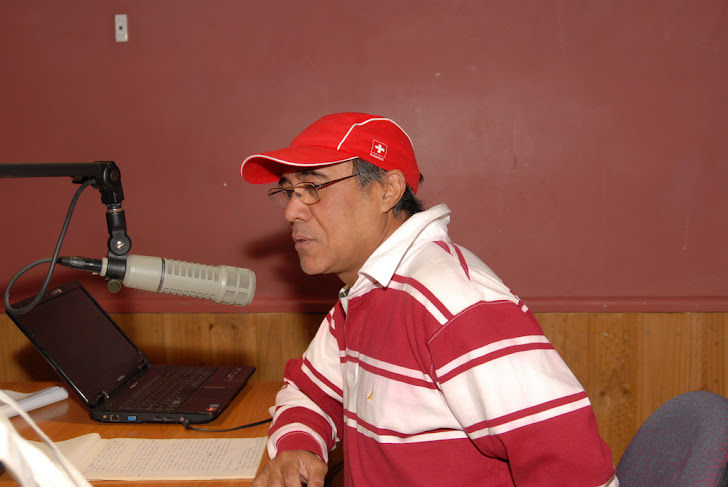
George at Studio 2GLF 89.3 fm
Broadcasting Emission Kontak
Thursday, 1 March 2012

The Rodriguan Social Club of Victoria
OPINION of GDL
The Rodriguan Social Club of Victoria, a model of solidarity and success.
I was very impressed when I walked into the clubhouse of the RSCV for the first time on 19 February 2012. While the interior decoration of the club is very original, the atmosphere is so welcoming.
It is immediately felt that all the members are very connected to the club as a building but more so as a group who share the same commitment, the same values and the same passion. There is a great feeling of belonging and solidarity among the members.
What is more impressive is the cordial, friendly, community and family atmosphere that prevail where anyone and everyone is put at ease straightaway.
The Rodriguan Social Club of Victoria can be classified as a model of democracy.
While the club is under the leadership of a Central Committee, it operates with full disclosure and transparency. Power is decentralised, all the members are involved in one way or another in the running of the club. In politics we call this participative democracy a new and modern paradigm which is gaining momentum and more consideration.
This model is working perfectly for the club. It is a strategy which allows the RSCV to reach its aims, goals and objectives. It keeps the bond among members while focussing on the bigger picture.
The members, and rightly so, have a sense of pride of what they have achieved. It is a dream comes true, as was put to me by the President Cyril Appadoo.
But it is also a dream that they are living in the reality. A baby that is being taken care of with much attention and which is growing and developping.
The other intangible, but how big, achievement of the RSCV is they way they are keeping the Rodriguan legacy and culture alive in a western city which is also very multicultural. They have consistently value their food, music and dances.
The Rodriguan Community of Victoria has made their culture, and their country of origin, known to the wider Australian Community through their frequent participations in festivals and other cultural events.
There is no doubt that this community has positioned itself strongly and conspicuously on the social and cultural landscape of Victoria .
Bravo a Fidou, Cyril, Mikel. Leo et les autres.
Tuesday, 28 February 2012
Melbourne the most liveable city of Australia, by Marie Armitage
On Tue, Feb 28, 2012 at 4:21 PM, Marie Armitage <m.armitage@deakin.edu.au> wrote:
Thank you GDL for the compliments. It is no accident that Melbourne continuously is voted as the world's most liveable city. It is not due to its weather but merely for its people. People take time to live here and it is not all about just ‘boulot, metro, dodo’.
It was a real pleasure to have you in Melbourne.Those who have met you for the first time, have been very impressed with your open-mindness and provided us with an insight of everyday life in Sydney. Your speech at the Rodriguan mini fair will be remembered for a long time. You brought in this personal touch which has touched everybody in the room. People have obviously a lot of respect for you – you could not even hear a noise in the roomexcept your voice in this hall full of people including children. We truly hope that you will returnvery soon et pou fair la faya enkor!!!!
Monday, 27 February 2012
Melbourne, the friendliest city in Australia
You read any tourist promotion material on Australia and they will all say that Melbourne is the friendliest city. This assessment is confirmed by any visitor from overseas of from interstate.No matter the time or season, the visitor is always taken care of in one way or another.
In the past, it was said that Melbourne had the worst climate, the most versatile to the extent of having four seasons in a day and the coldest winter.
Many Melbournians would agree that the city was very cold in the sixties and seventies but not any more. Now Melbourne has the hottest summer which makes many of its inhabitants uncomfortable as they prefer cold weather, having been used to it.
The weather in Melbourne has changed a lot and this is seen by the vegetation. Fruit trees and vegetables that would not grow previously, even up to the nineties, are not blossoming in Melbourne. Many of my friends and relatives, now have a beautiful vegetable garden and tropical fruit tress in their backyards.
If the weather was cold and has gone warmer, the people of Melbourne have always been warm and welcoming. They like partying with friends and relatives. Every occasion is a good one, not an excuse. The visitor is always welcomed and greeted in the most cordial and friendly manner. Food and drinks will be abundant and all the family and friends will flock around.
Each time I visit Melbourne I enjoyed my stay and each time I find that this time it has been better. There is always a ball, a social activity or cultural show. On the family side there will always be a birthday or a family gathering of some sort.
In ten days I attended two family anniversaries, a mini-fair at the Rodriguan Social Club of Victoria and there was a multi-cultural show at Clayton.
My girl friend Marie, with very short notice, invited some of her relatives for a small gathering and it turned out to be a big party with plenty of food and drinks. Each one brought a plate and drinks. The night was very friendly and I immediately enjoyed company of people I never met before. The relationship was sincere and spontaneous. The conversation was interesting and the atmosphere enjoyable. I could feel the warmth and sincerity and I was really overwhelmed.
I had a such good time.
After ten days when we left Melbourne, my mother cried. she has visited Melbourne so many times and I tried to understand why she cried this time. It is simply because in Sydney she never felt so surrounded and taken care of. Our cousins,Ringo and Dette have spoiled her so much with good food and tenderness. Not forgetting how our friend Donaldson made her laugh.
The warmth and friendliness of the people of Melbourne had cut through her bones.
I also felt sad and promised that we will go back to Melbourne more often.
In the past, it was said that Melbourne had the worst climate, the most versatile to the extent of having four seasons in a day and the coldest winter.
Many Melbournians would agree that the city was very cold in the sixties and seventies but not any more. Now Melbourne has the hottest summer which makes many of its inhabitants uncomfortable as they prefer cold weather, having been used to it.
The weather in Melbourne has changed a lot and this is seen by the vegetation. Fruit trees and vegetables that would not grow previously, even up to the nineties, are not blossoming in Melbourne. Many of my friends and relatives, now have a beautiful vegetable garden and tropical fruit tress in their backyards.
If the weather was cold and has gone warmer, the people of Melbourne have always been warm and welcoming. They like partying with friends and relatives. Every occasion is a good one, not an excuse. The visitor is always welcomed and greeted in the most cordial and friendly manner. Food and drinks will be abundant and all the family and friends will flock around.
Each time I visit Melbourne I enjoyed my stay and each time I find that this time it has been better. There is always a ball, a social activity or cultural show. On the family side there will always be a birthday or a family gathering of some sort.
In ten days I attended two family anniversaries, a mini-fair at the Rodriguan Social Club of Victoria and there was a multi-cultural show at Clayton.
My girl friend Marie, with very short notice, invited some of her relatives for a small gathering and it turned out to be a big party with plenty of food and drinks. Each one brought a plate and drinks. The night was very friendly and I immediately enjoyed company of people I never met before. The relationship was sincere and spontaneous. The conversation was interesting and the atmosphere enjoyable. I could feel the warmth and sincerity and I was really overwhelmed.
I had a such good time.
After ten days when we left Melbourne, my mother cried. she has visited Melbourne so many times and I tried to understand why she cried this time. It is simply because in Sydney she never felt so surrounded and taken care of. Our cousins,Ringo and Dette have spoiled her so much with good food and tenderness. Not forgetting how our friend Donaldson made her laugh.
The warmth and friendliness of the people of Melbourne had cut through her bones.
I also felt sad and promised that we will go back to Melbourne more often.
Monday, 6 February 2012
Elections Regionales a Rodrigues - Victoire de l'OPR
OPR back in control of the Rodrigues Regional Assembly.
I was in Mauritius in December 2011 and as a journalist, I discussed many things with my colleagues over there from L'Express, Le Mauricien, Weekend and Radio One.
I know in Mauritius the journalists are well informed, they have many sources and their informations are pretty accurate.
As politics is the main game in Mauritius, we also touched on the situation in Rodrigues.
They were all adamant that Serge Clair will make a comeback. I was not so convinced, because Navin Ramgoolam had made Nicholas Vonmally, Minister for Rodrigues and as his party was in control of the Rodrigues Regional Assembly. The Mouvement Rodriguais had the upper hand on Rodrigues' business and were free to do whatever they wanted there.
This state of affairs was consolidated by Navin's nomination of Christain Leopold, another member of MR, as Parliamentary Secretary to the Ministry for Rodrigues. This was another plus for the MR.
What I did not know and did not consider, was that MR was administering Rodrigues in a very lavish style and favouring their people and political agents to the extreme. Those who are not on their side were marginalised. There was a climate of fear among public servants in patricular, and the public in general. Some were even comparing the atmosphere as tense, leaning towards dictatorship.
There was a sense of disbelief among the people and, silently they were not approving the practice of favouritism and waste of public funds for their own benefits by the Commissioners. Some of the them were involved in corruptions and business of dodgy sorts, pocketing money indirectly from public funds and directly from business people for favours.
The removal of Johnson Roussety from the post of Chief Commissioner and his replacement by Gaetan Jabimissar did not change the prevailing atmosphere and the style of MR government.
I also read from an interview with a respected lawyer in Mauritius, Robert Ahnee, that the Minister for Rodrigues was very unpopular there. "Il n'est pas aime" he said. He was confident that Serge Clair and his party would make a comeback.
The electoral campaign was not a long one; it was even disrupted by a cyclone.
Many things came to the surface during the campaign. While the OPR was campaigning on self reliance and responsibility, the MR was campaigning on more reliance on the Mauritian government to provide more for Rodrigues. The MR was said to be echoing policies of Mauritian parties like the Labour Party and the Parti Mauricien Social Democrate. The MR is considered to be their little brother i.e part of the same family.
The people of Rodrigues could be poor but they are proud. Turning them into beggars and making them feel inferior, do not go well with them. One politician even say " we are already poor, but we cannot be poorer if we do not rely on Mauritius." This is symbolic of their pride.
The MR used big logistics, money and bribes to buy votes during their campaign. According to a lady (quoted in L"Express -comments), they have never seen so much money floating around and so many gifts and "bagaz" given during an election campaign.
The OPR went about their business of talking frankly and sincerely to the people. Their team was young with many new comers who carried no scars of past political activities They could not be criticised of any previous maladministration or accused of corruptions.
On the other hand, most of the candidates of the MR have been in power before, in one way or another. The strategy of having candidates with experience was probably miscalculated.
The victory of the OPR is more the result of honesty and sincerity. It proved that money can't buy people's conscience and ask them to swallow their pride. This victory of OPR symbolises that money cannoy buy everything.
The MR thought that because one is poor , one has to succumb to the whims and wills of the rich.They were well entrenched in their ivory towers, enjoying a good life with all the privileges, at the expense of the people. They relied on propaganda and persuasion with material means.
On the 5 of February 2012, the people of Rodrigues cast their votes. The democratic process delivered The OPR as winner and the voice of the people should be respected. Vox Populi Vox Dei.
There should be no boycott from the Central Government which should work in harmony, mutual respect and collaboration with the new Regional Government for the betterment of the people of Rodrigues.
The Prime Minister of Mauritius (and Rodrigues), should act with dignity and statesmanship beyond political considerations. I expect Navin Ramgoolam and Serge Clair to engage in a dialogue as soon as possible and on a regular and continuous basis with dignity and respect.
A democratic government is for all people, with all people, not only for a few and for friends.
I was in Mauritius in December 2011 and as a journalist, I discussed many things with my colleagues over there from L'Express, Le Mauricien, Weekend and Radio One.
I know in Mauritius the journalists are well informed, they have many sources and their informations are pretty accurate.
As politics is the main game in Mauritius, we also touched on the situation in Rodrigues.
They were all adamant that Serge Clair will make a comeback. I was not so convinced, because Navin Ramgoolam had made Nicholas Vonmally, Minister for Rodrigues and as his party was in control of the Rodrigues Regional Assembly. The Mouvement Rodriguais had the upper hand on Rodrigues' business and were free to do whatever they wanted there.
This state of affairs was consolidated by Navin's nomination of Christain Leopold, another member of MR, as Parliamentary Secretary to the Ministry for Rodrigues. This was another plus for the MR.
What I did not know and did not consider, was that MR was administering Rodrigues in a very lavish style and favouring their people and political agents to the extreme. Those who are not on their side were marginalised. There was a climate of fear among public servants in patricular, and the public in general. Some were even comparing the atmosphere as tense, leaning towards dictatorship.
There was a sense of disbelief among the people and, silently they were not approving the practice of favouritism and waste of public funds for their own benefits by the Commissioners. Some of the them were involved in corruptions and business of dodgy sorts, pocketing money indirectly from public funds and directly from business people for favours.
The removal of Johnson Roussety from the post of Chief Commissioner and his replacement by Gaetan Jabimissar did not change the prevailing atmosphere and the style of MR government.
I also read from an interview with a respected lawyer in Mauritius, Robert Ahnee, that the Minister for Rodrigues was very unpopular there. "Il n'est pas aime" he said. He was confident that Serge Clair and his party would make a comeback.
The electoral campaign was not a long one; it was even disrupted by a cyclone.
Many things came to the surface during the campaign. While the OPR was campaigning on self reliance and responsibility, the MR was campaigning on more reliance on the Mauritian government to provide more for Rodrigues. The MR was said to be echoing policies of Mauritian parties like the Labour Party and the Parti Mauricien Social Democrate. The MR is considered to be their little brother i.e part of the same family.
The people of Rodrigues could be poor but they are proud. Turning them into beggars and making them feel inferior, do not go well with them. One politician even say " we are already poor, but we cannot be poorer if we do not rely on Mauritius." This is symbolic of their pride.
The MR used big logistics, money and bribes to buy votes during their campaign. According to a lady (quoted in L"Express -comments), they have never seen so much money floating around and so many gifts and "bagaz" given during an election campaign.
The OPR went about their business of talking frankly and sincerely to the people. Their team was young with many new comers who carried no scars of past political activities They could not be criticised of any previous maladministration or accused of corruptions.
On the other hand, most of the candidates of the MR have been in power before, in one way or another. The strategy of having candidates with experience was probably miscalculated.
The victory of the OPR is more the result of honesty and sincerity. It proved that money can't buy people's conscience and ask them to swallow their pride. This victory of OPR symbolises that money cannoy buy everything.
The MR thought that because one is poor , one has to succumb to the whims and wills of the rich.They were well entrenched in their ivory towers, enjoying a good life with all the privileges, at the expense of the people. They relied on propaganda and persuasion with material means.
On the 5 of February 2012, the people of Rodrigues cast their votes. The democratic process delivered The OPR as winner and the voice of the people should be respected. Vox Populi Vox Dei.
There should be no boycott from the Central Government which should work in harmony, mutual respect and collaboration with the new Regional Government for the betterment of the people of Rodrigues.
The Prime Minister of Mauritius (and Rodrigues), should act with dignity and statesmanship beyond political considerations. I expect Navin Ramgoolam and Serge Clair to engage in a dialogue as soon as possible and on a regular and continuous basis with dignity and respect.
A democratic government is for all people, with all people, not only for a few and for friends.
Friday, 3 February 2012
Mauritius, democracy and the Independent Press
During my stay in Mauritius
I take the view that the Independent Press inMauritius
My strongest observation is that, without the Independent Press, Mauritians would be ill-informed as
news are actually manipulated by the Government TV and Newspapers.
The Independent Press are preventingMauritius drifting into a dictatorship of the model of Cuba , Zimbabwe , North Korea , or China
While there is freedom of speech inMauritius
I also had the opportunity of interviewing one of the most respected journalist, Mr Finlay Salesse.
He one of the rare to call a spade a spade and go where others fear to tread.
His show on Radio One from 9 to 11 a.m every weekdays is probably the most listened program.
"Enquete En directe" - is the voice of the people of Mauritius, a voice and a platform for those who have no voice, those who are not listened to, those that are neglected and turned down by the Government Public Servants, those who are in need of support and protection, those who have been lied and duped by politicians, those who suffer from discrimination, and many others who find in " Enquete en Directe" an SOS, une bouee de sauvetage.
If you would like to have a copy of Finlay's analysis of the social and political situation ofMauritius
I take the view that the Independent Press in
My strongest observation is that, without the Independent Press, Mauritians would be ill-informed as
news are actually manipulated by the Government TV and Newspapers.
The Independent Press are preventing
While there is freedom of speech in
I also had the opportunity of interviewing one of the most respected journalist, Mr Finlay Salesse.
He one of the rare to call a spade a spade and go where others fear to tread.
His show on Radio One from 9 to 11 a.m every weekdays is probably the most listened program.
"Enquete En directe" - is the voice of the people of Mauritius, a voice and a platform for those who have no voice, those who are not listened to, those that are neglected and turned down by the Government Public Servants, those who are in need of support and protection, those who have been lied and duped by politicians, those who suffer from discrimination, and many others who find in " Enquete en Directe" an SOS, une bouee de sauvetage.
If you would like to have a copy of Finlay's analysis of the social and political situation of
Journalism and technology
The impact of digital technology on journalism and media producers.
The advent of new technology has surely led to a new trend in journalism by what is called convergence.This is moving away from the traditional form of reporting on the print and paper format, or tabloid, to posting articles, videos and images online. It urges jornalists to develop new skills or becoming multiskilling.The journalist, going out for a story, will not only have his pen and notebook but also his camera, videocamera, microphone and recorder all packed in a bag.
This new way of reporting and posting news stories online meets the concept of how the audience will now access the news.
News can now be accessed on the mobile phone, on ipads or personal computers instantly. The audience does not have to wait till the hour to hear the latest news on radio or wait till they get home to watch TV or wait the next morning till the paper is published.
Depending on its preference and circumstances, the audience will also choose the format or again one form where he or she obtains more gratification.
In terms of Media producers, it also introduce a different way of producing news in various ways using new technology to capture a bigger audience.The new media now allows a greater exposure for advertising a product or service.
Subscribe to:
Posts (Atom)